You’ve probably noticed it before: a little blood after brushing, or your gums feeling tender and swollen. It doesn’t seem like a big deal at first, but the discomfort sticks around. Flossing hurts, and even simple meals become uncomfortable.
It’s easy to ignore these signs. After all, life’s busy, and a dental checkup can always wait. But your gums are trying to tell you something.
When this happens, many people start looking into gum disease treatment and often come across terms like scaling and root planing. It might sound complicated, but it’s actually a straightforward procedure that plays a crucial role in restoring your gum health.
Let’s take a closer look at what it really involves.
Why Does Gum Health Deserve More Attention?
Teeth usually get all the credit.
We polish them. Whiten them. Show them off in photos.
Gums, on the other hand, work silently in the background. They hold everything together like the firm grip of your palm around a pen. Without that grip, even the strongest pen slips away.
When plaque and bacteria collect along the gum line, inflammation begins. Gums swell, bleed, and pull slightly away from teeth. Pockets form. Bacteria move deeper. Infection grows.
This process does not happen overnight. It builds slowly and quietly.
That is exactly why early action matters.
Understanding Gum Disease Treatment And Why Scaling And Root Planing Matter
When infection goes beyond mild gingivitis, regular brushing and routine cleaning cannot fully solve the problem. Bacteria hide under the gum line, where your toothbrush simply cannot reach.
This is where professional gum treatment steps in.
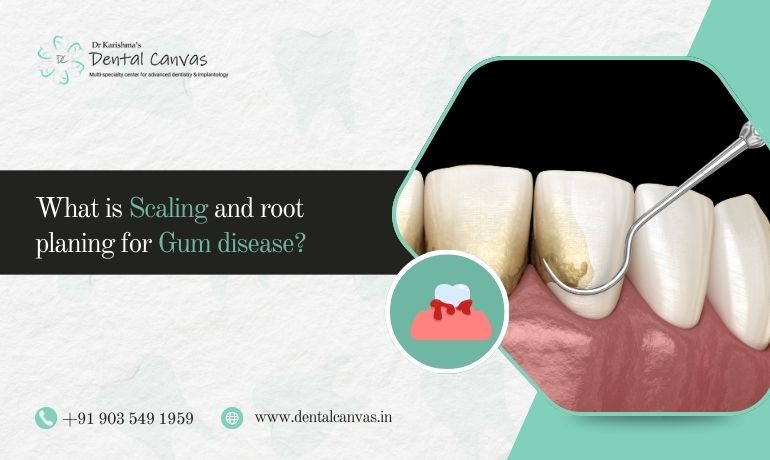
Dentists use scaling and root planing to clean below the surface and remove harmful buildup that fuels infection. Think of it as deep cleaning for areas your home tools cannot access. Like dust that settles behind heavy furniture, bacteria gather in spaces you rarely see.
At Dental Canvas, dentists often recommend this procedure when they notice:
- Persistent gum bleeding
- Swollen or tender gums
- Bad breath that does not improve
- Deep gum pockets
- Early bone loss on X-rays
Instead of masking symptoms, they focus on removing the root cause.
What Exactly Is Dental Scaling And Root Planing?
Let’s break it into two simple steps.
1. Scaling
Dentists remove plaque and tartar from:
- Tooth surfaces
- Gum line
- Areas below the gums
They use specialized ultrasonic and hand instruments. These tools clean thoroughly without damaging healthy tissue.
2. Root planing
Next, dentists smooth the tooth roots.
Bacteria stick easily to rough surfaces. Smoothing the roots makes it harder for plaque to attach again. It also helps gums reattach naturally to the teeth.
Picture running your hand over a scratched wooden table versus a polished one. Dust settles quickly on the rough patch but slides off the smooth surface. Root planing creates that polished surface inside your mouth.
Together, these steps reduce infection and give gums a chance to heal.
How Does The Procedure Feel?
Many patients imagine something painful or complicated.
In reality, dentists keep the process comfortable.
Here’s what typically happens:
- Local anesthesia numbs the area
- The dentist cleans section by section.
- Mild pressure may occur, not sharp pain
- Sessions may take one or two visits.
Afterward, you might feel slight tenderness for a day or two. Warm saltwater rinses and simple medications usually manage this easily.
Most people return to normal activities the same day.
When Do You Need Scaling And Root Planing?
Not everyone with mild bleeding requires deep cleaning.
Dentists recommend it when gum infection moves beyond early gingivitis. At this stage, home care alone cannot reverse the condition.
Warning signs include:
- Gums that bleed regularly
- Persistent swelling
- Gum recession
- Loose teeth
- Bad taste or odor
- Spaces forming between teeth
Early intervention often prevents more complex procedures later.
Ignoring the problem feels like ignoring a small leak under your sink. At first, it looks harmless. Over time, it damages everything around it.
Benefits Of Early Gum Infection Treatment
Scaling and root planing offer more than just cleaner teeth.
Patients often notice:
- Reduced bleeding>
- Fresher breath
- Tighter, healthier gums
- Less sensitivity
- Lower risk of tooth loss
Most importantly, the procedure helps stop disease progression.
Dental Canvas emphasizes preventive care because stopping damage early protects both oral health and overall health.
Research shows links between gum infection and systemic issues like diabetes and heart conditions. Healthy gums support a healthier body.
Aftercare Tips For Faster Healing
Post-treatment care plays a big role in success.
Dentists usually advise:
- Gentle brushing twice daily
- Daily flossing
- Antibacterial mouthwash, if prescribed
- Avoid smoking
- Regular follow-ups
Consistency matters more than perfection.
Think of it like watering a plant regularly rather than flooding it once. Small daily habits create lasting results.
How Scaling Fits Into Long-Term Gingivitis Treatment?
Scaling and root planing do not act as a one-time fix. They start the healing process.
After the procedure, dentists monitor gum health during maintenance visits. Professional cleanings every few months keep bacteria under control.
This ongoing care strengthens the effects of gum treatment and prevents relapse.
At Dental Canvas, clinicians often track pocket depth and gum response over time. These small measurements reveal how well your gums recover.
Healing becomes visible not through dramatic changes but through steady improvement.
FAQs
What is scaling and root planing in gum disease treatment?
Scaling and root planing is a professional deep cleaning procedure that removes plaque and tartar from below the gum line. Dentists clean infected areas and smooth the tooth roots to reduce bacterial attachment. This process helps gums heal and reattach to teeth naturally. It targets the source of infection rather than just surface stains. Many patients see improvement in bleeding and swelling within weeks.
Is dental scaling and root planing painful?
Dentists use local anesthesia to keep the area numb during treatment. Most people feel mild pressure but no sharp discomfort. After the session, slight soreness or sensitivity may occur for a short time. Simple pain relief methods usually manage these symptoms easily. The procedure remains safe and comfortable for most patients.
How long does gum infection treatment take to show results?
Healing begins within days, but full improvement may take several weeks. Gums slowly tighten, and inflammation reduces as bacteria disappear. Regular brushing and follow-up visits support faster recovery. Dentists measure progress through pocket depth reduction. Consistent care ensures stable long-term results.
Can gingivitis treatment prevent tooth loss?
Yes, early gingivitis treatment and professional cleaning can stop disease progression before it damages bone. Healthy gums hold teeth firmly in place. When you treat infection early, you protect this support system. Delaying care increases the risk of loose teeth and advanced problems. Timely treatment greatly improves outcomes.
Scale Your Gums And Get Rid Of Ghams!
Healthy gums rarely demand attention loudly. They whisper through small changes. Catching those whispers early can protect your smile for years.
If you notice bleeding or persistent sensitivity, exploring professional gum disease treatment at Dental Canvas may help you understand what your gums truly need and whether scaling and root planing could quietly restore balance.
Sometimes the simplest procedures create the biggest shift. And that first step might feel easier than you imagined.