It usually starts with something that can be easily ignored. A sip of cold water. A bite of ice cream. A sudden, sharp sensation that makes you pause mid-conversation. You brush it off at first, thinking it is temporary. But over time, even the idea of a routine dental visit begins to feel uncomfortable.
Many people delay their teeth cleaning treatment for this exact reason. Sensitive teeth create hesitation, and hesitation often leads to bigger oral health issues. If you have ever wondered whether cleaning might make sensitivity worse, you are not the only one. In fact, this concern shows up in almost every discussion around teeth cleaning treatment for sensitive teeth.
At Dental Canvas, this question comes up often during consultations. And interestingly, the answer rarely begins with the cleaning itself. It begins with understanding why sensitivity exists in the first place.
Why Do Teeth Become Sensitive in the First Place?
Before exploring teeth cleaning treatment for sensitive teeth, it helps to understand what causes that uncomfortable sensation.
Teeth usually become sensitive due to exposure of the inner layer of the tooth, called dentin. This layer connects directly to nerve endings, which explains the sudden discomfort.
Common causes include:
- Enamel wear from aggressive brushing
- Gum recession exposing tooth roots
- Plaque buildup and tartar accumulation
- Teeth grinding habits
- Acidic foods and beverages
- Previous dental treatments
When plaque builds up, it does more than just affect appearance. It irritates gums and contributes to sensitivity. Ironically, avoiding professional teeth cleaning for sensitive teeth can worsen the problem over time.
Will Cleaning Make Sensitivity Worse?
This is where most people hesitate.
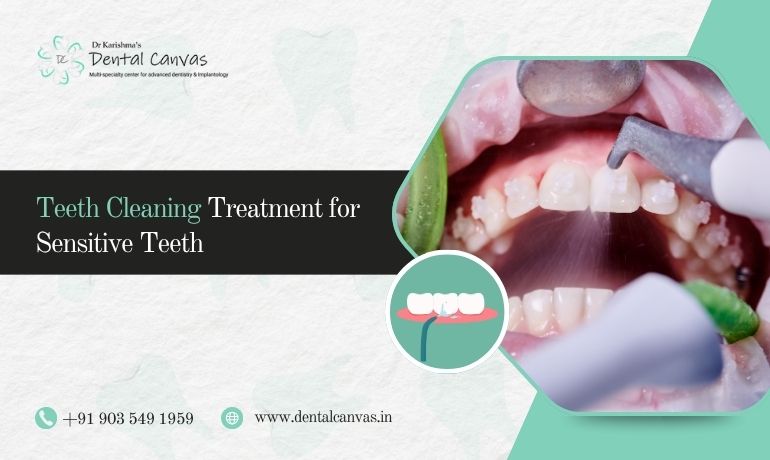
The idea of metal instruments touching already sensitive teeth does not sound appealing. However, modern dentistry has evolved significantly. Today’s sensitive teeth cleaning procedure focuses on comfort as much as results.
Instead of aggressive scaling, dentists now use a gentle teeth cleaning technique that adapts to each patient’s sensitivity level. This approach ensures effective plaque removal for sensitive teeth without causing unnecessary discomfort.
At Dental Canvas, patients often notice that their sensitivity actually improves after cleaning rather than worsening. That is because removing plaque reduces gum inflammation and helps restore overall oral balance.
What Happens During a Teeth Cleaning Treatment for Sensitive Teeth?
Understanding the process makes it easier to feel comfortable.
Teeth cleaning treatment for patients with sensitivity usually follows a carefully planned approach:
1. Initial Assessment
The dentist evaluates your teeth and gums to identify sensitive areas. This step helps customize the teeth cleaning treatment for sensitive teeth.
2. Use of Desensitizing Agents
In many cases, dentists apply numbing gels or desensitizing solutions before starting the cleaning.
3. Gentle Scaling
Instead of aggressive tools, dentists use controlled techniques for plaque removal for sensitive teeth. Ultrasonic scalers with adjustable intensity often help minimize discomfort.
4. Polishing with Care
The polishing step uses mild abrasives designed specifically for teeth cleaning treatment for sensitive teeth.
5. Post-Cleaning Protection
Fluoride or desensitizing treatments help reduce sensitivity after the procedure.
This structured, sensitive teeth cleaning procedure ensures both comfort and effectiveness.
Benefits of Professional Dental Cleaning for Sensitive Teeth
Many people focus only on the fear of discomfort. But the long-term advantages often outweigh that concern.
Here are some key benefits of professional dental cleaning:
- Reduces gum inflammation and bleeding
- Improves overall gum health
- Removes stubborn plaque and tartar
- Helps prevent cavities and decay
- Supports long-term sensitivity relief
- Enhances oral hygiene habits
Regular teeth cleaning for gum health also plays a major role in preventing future dental issues.
When done correctly, treating sensitive teeth with cleaning becomes part of the solution, not the problem.
Choosing the Best Dental Cleaning Treatment for Sensitivity
Not all cleaning approaches work the same way for everyone. That is why personalization matters.
When looking for the best dental cleaning treatment for sensitivity, consider the following:
- Experience of the dentist in handling sensitive cases
- Availability of modern tools and techniques
- Use of desensitizing solutions
- Patient comfort protocols
- Follow-up care and guidance
A clinic that understands sensitive teeth treatment options can significantly improve your experience.
At Dental Canvas, patients often share how a personalized approach changes their perception of dental visits. The difference lies in attention to detail and patient comfort.
How to Prepare for Your Teeth Cleaning Appointment?
A little preparation can make a big difference.
Before your teeth cleaning treatment, you can:
- Use a soft-bristle toothbrush
- Avoid extremely hot or cold foods
- Inform your dentist about sensitivity levels
- Maintain regular brushing and flossing
Understanding how to clean sensitive teeth at home also supports better results during professional cleaning.
What Happens After the Cleaning?
After a professional teeth cleaning for sensitive teeth, mild sensitivity may occur. This usually settles within a few days.
Dentists often recommend:
- Using desensitizing toothpaste
- Avoiding extreme temperatures in food
- Maintaining proper oral hygiene
- Scheduling regular follow-ups
The goal is to ensure long-term teeth cleaning and tooth sensitivity relief.
When Should You Not Delay Teeth Cleaning?
Some signs indicate that you should not postpone your teeth cleaning treatment, even if sensitivity exists:
- Bleeding gums
- Persistent bad breath
- Visible tartar buildup
- Increased tooth sensitivity
- Gum swelling or discomfort
Ignoring these signs can lead to more complex dental issues.
A Small Shift in Perspective
It is easy to assume that avoiding dental cleanings protects sensitive teeth. But in reality, the opposite often happens.
Skipping teeth cleaning treatment for sensitive teeth allows plaque and bacteria to build up. This increases inflammation and worsens sensitivity over time.
Think of cleaning as maintenance rather than intervention. The earlier you address the issue, the easier it becomes to manage.
Frequently Asked Questions
How much does teeth cleaning treatment cost in Bangalore?
The cost of a teeth cleaning treatment in Bangalore usually ranges between ₹1,500 and ₹3,000. The price may vary depending on plaque buildup, technology used, and whether you need teeth cleaning treatment for sensitive teeth. Advanced professional teeth cleaning for sensitive teeth may cost slightly more due to specialized care. Clinics offering dental cleaning often include desensitizing solutions in the procedure. A consultation helps determine the exact cost based on your oral condition.
Is teeth cleaning treatment safe for sensitive teeth?
Yes, a teeth cleaning treatment is safe when dentists use a customized teeth cleaning treatment for sensitive teeth. They follow a sensitive teeth cleaning procedure using gentle tools and desensitizing agents. This reduces discomfort while protecting enamel and gums. Choosing professional teeth cleaning for sensitive teeth ensures better comfort and results. Regular cleaning also helps reduce inflammation and improve sensitivity over time.
Will dental cleaning increase tooth sensitivity?
A teeth cleaning treatment does not increase sensitivity permanently. Some mild discomfort may occur after dental cleaning, but it usually fades within a few days. The teeth cleaning treatment for sensitive teeth removes plaque that often causes sensitivity. Using a gentle teeth cleaning technique ensures minimal irritation. Over time, treating sensitive teeth with cleaning actually improves comfort and oral health.
What is the best dental cleaning treatment for sensitivity?
The best dental cleaning treatment for sensitivity focuses on personalized care. Dentists use a sensitive teeth cleaning procedure with gentle scaling and polishing. This includes effective plaque removal for sensitive teeth and desensitizing gels. Choosing professional teeth cleaning for sensitive teeth ensures safe and comfortable results. Regular cleaning also supports teeth cleaning for gum health and long-term relief.
Is tooth cleaning painful?
A teeth cleaning treatment is usually not painful, but you may feel slight pressure or vibration during the process. Patients with sensitivity may experience mild discomfort, especially during teeth cleaning treatment for sensitive teeth. However, dentists use a gentle teeth cleaning technique when needed. Professional teeth cleaning for sensitive teeth focuses on comfort throughout the procedure. Any sensitivity after cleaning usually settles within 1–2 days.
Can I eat after a dental cleaning?
Yes, you can eat after a teeth cleaning treatment, but dentists usually advise waiting 30–60 minutes. If you had fluoride treatment during your teeth cleaning treatment for sensitive teeth, you may need to wait longer. After dental cleaning, it is better to choose soft and lukewarm foods. Avoid very hot, cold, or acidic foods for a few hours. This helps prevent irritation and supports faster recovery.
Can teeth cleaning treatment prevent cavities?
Yes, a teeth cleaning treatment helps prevent cavities by removing plaque and tartar buildup. Regular teeth cleaning treatment for sensitive teeth reduces bacteria that cause decay. It also improves teeth cleaning for gum health and prevents gum disease. Choosing professional teeth cleaning for sensitive teeth ensures thorough cleaning and long-term protection. Consistent care plays a key role in maintaining healthy teeth and gums.
Early Attention Prevents Problems In The Long Run
Sensitivity often feels like a warning sign. But sometimes, it is also an invitation to take better care of your oral health.
Avoiding treatment may seem easier in the moment, but it rarely helps in the long run. With the right approach, even something as routine as a teeth cleaning treatment can feel manageable and even relieving.
If you have been delaying your visit because of sensitivity, it might be time to reconsider. A gentle, well-planned approach can make all the difference.
And sometimes, taking that one small step toward care brings the greatest sense of relief.